Retinoid Conversions
Retinoids are widely considered the ✨ 𝒈𝒐𝒍𝒅 𝒔𝒕𝒂𝒏𝒅𝒂𝒓𝒅✨ in skincare due to their ability to improve the appearance of skin.
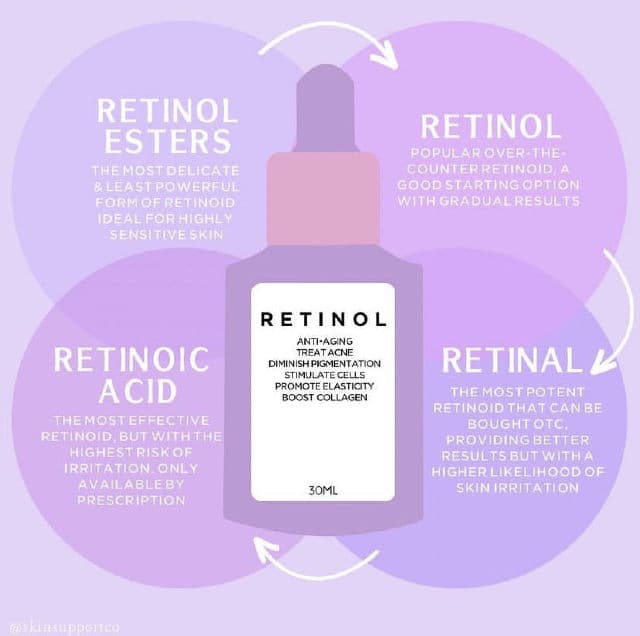
The progression of retinoids within the skin is a fascinating journey, starting with retinol esters, then transforming into retinol, followed by retinaldehyde, and finally reaching the most potent form of retinoic acid. Throughout this journey, retinoids boost collagen production, enhance skin texture and complexion, and erase fine lines. The transformation from the weakest form to the active form can be divided into four stages.
1. Retinol Esters - The initial form of Vitamin A found in many cosmetic and skincare products, retinol esters are the weakest form of retinoids and typically well-tolerated by all skin types.
2. Retinol - Retinol is a more powerful form of Vitamin A that acts as an intermediate step in the conversion to retinoic acid. It can improve skin texture, tone, and reduce the appearance of fine lines. However, retinol can be irritating to some skin types.
3. Retinaldehyde - Retinaldehyde is considered the most potent over-the-counter retinoid that can be purchased without a prescription. It is a stage between retinol and retinoic acid and provides some of the benefits of retinoic acid without extreme skin irritation.
4. Retinoic Acid - The active form of Vitamin A, retinoic acid is the most potent form of retinoids and provides the most significant benefits to the skin. However, it is only available with a prescription from a practitioner and can be irritating to some skin types.
• ☝️ALWAYS Start with a low-strength retinoid, using a pea-sized amount 2-3 times a week, and gradually increasing as tolerated. Even if you use a low or high strength retinoid you will see benefits in the skin.
•🧴REMEMBER to always wear a good quality sunscreen during the day, as retinoids can increase skin sensitivity to the sun.
🔑PATIENCE is key with retinoids, as it can take several weeks to see results, but the end result is worth the wait!
It is also important to note that alternative ingredients, such as bakuchiol, may provide similar benefits to retinoids without the potential for skin irritation. However these have not been widely studied to complete determine a new ingredient that is as effective as a retinoid.
Not all skins can tolerate a retinoid and that’s okay. The conversions from retinol esters to retinoic acid isn’t always 100% efficient. As such some user may experience redness, irritation or dryness when using that may never cease.


 242 Views